
Why Your Pain Keeps Coming Back (And What Your Body Is Trying to Tell You

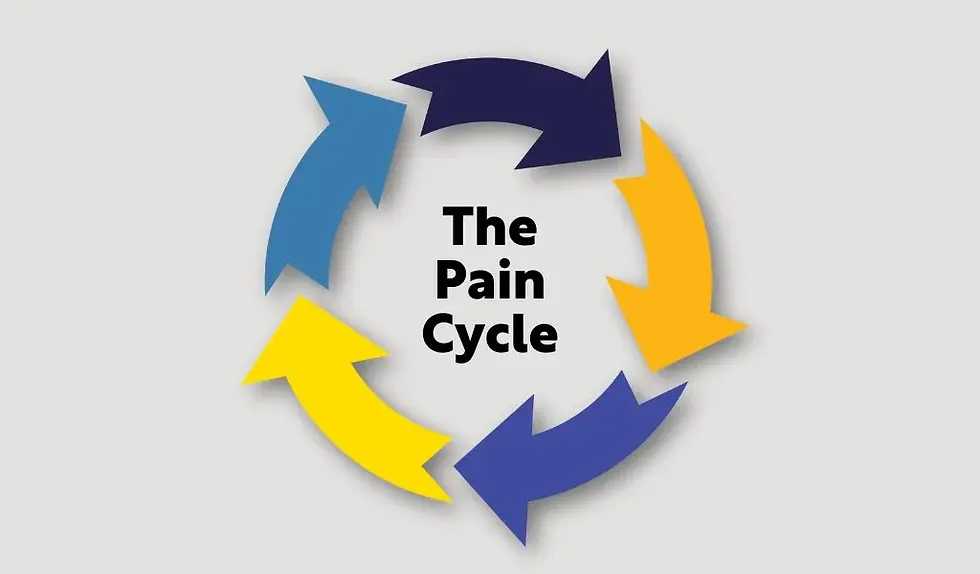
Have you ever taken a few days off because your knee, shoulder, or low back was bothering you, only to return to your normal routine and feel the pain come right back?
You're not alone.
For many active adults, pain becomes a frustrating cycle: rest, feel better, return to activity, flare up, repeat.
The natural assumption is that you're doing too much. But in many cases, that's not the real issue. Recurring pain is often a sign that your body wasn't fully prepared for the demands you placed on it—or that an underlying problem was never addressed in the first place.
Pain Isn't the Problem—It's the Message
One of the biggest misconceptions about pain is treating it as the problem itself rather than viewing it as valuable information.
Pain is your body's way of getting your attention. It tells you that something isn't working as efficiently as it should.
Sometimes pain appears in different places at different times. Your low back hurts one week, your hip starts bothering you the next, and then your knee becomes the issue. This can make it feel like you're chasing symptoms without ever finding a real solution.
But pain that moves isn't always a sign that things are getting worse. Often, it's a sign that your body is adapting and compensating.
When a joint lacks mobility or certain muscles aren't doing their job, your body finds another way to accomplish the movement. While compensation can help you keep moving in the short term, it often creates excessive stress elsewhere. Over time, that stress accumulates—and eventually shows up as pain.
The real question isn't where it hurts.
The real question is: Why is your body compensating in the first place?
The "Push Through It" Mentality
Many active people pride themselves on pushing through discomfort.
And while consistency is important, not all discomfort should be ignored.
There's a significant difference between normal training soreness and pain that signals a problem.
Muscle soreness after a workout typically improves within a day or two. Pain that lingers, keeps returning, worsens during activity, or requires regular icing and medication to manage is a different story.
That's your body telling you that something needs attention.
Ignoring those signals doesn't make you tougher. More often, it allows small issues to become bigger ones, leading to longer recovery times and more frustration down the road.
Why Rest Isn't the Complete Answer
When pain shows up, many people assume rest is the solution.
While taking time off can temporarily reduce irritation and calm symptoms, rest alone rarely fixes the underlying cause.
In fact, extended rest often creates a new challenge: decreased capacity.
Your muscles, tendons, joints, and nervous system adapt to what you regularly ask them to do. When activity stops completely, your body's tolerance for stress begins to decline.
Then comes the familiar scenario.
You finally feel better, return to your usual workout, long run, golf round, or pickleball match, and within days—or even hours—the pain is back.
Not because you're injured again, but because your body wasn't prepared for that level of demand.
A more effective approach is a gradual return to activity through progressive reloading. This process helps rebuild strength, coordination, mobility, and tissue tolerance so your body can handle activity without becoming overwhelmed.
The Missing Piece Most People Overlook
Another common reason pain keeps returning has nothing to do with how hard you're training and everything to do with how you're preparing.
Many people skip warmups altogether or rely on a few quick stretches before jumping into activity. Unfortunately, that's often not enough.
A quality warmup should:
Increase blood flow and circulation
Improve joint mobility
Activate key stabilizing muscles
Prepare your nervous system for movement
Think of it as turning your body's performance systems on before asking them to work.
Without proper preparation, some muscles fail to contribute the way they should, forcing other areas to take on more stress. That's when tightness, fatigue, and irritation begin to build.
Sometimes you notice it halfway through a workout. Other times, it doesn't show up until later that evening or even the next day.
Either way, the groundwork was laid before the pain appeared.
A Smarter Way Forward
If you've been stuck in the cycle of recurring pain, the answer usually isn't to stop moving.
And it isn't to push harder, either.
The solution is to move smarter.
That means:
Preparing your body before activity
Gradually building back into training after setbacks
Looking for patterns instead of focusing only on symptoms
Improving movement quality and control
Addressing the root cause of pain rather than masking it
Your body is remarkably adaptable when it's given the right inputs. When you improve how your body moves, stabilizes, and responds to stress, you don't just reduce pain—you create resilience.
The goal isn't simply to feel better for a few days.
The goal is to build a body that can continue doing the things you love without constantly starting over.
If your pain keeps returning despite rest, stretching, or taking time off, it may be time to stop chasing symptoms and start addressing what's actually driving the problem.
We’re here to help manage your success every step of the way.
Contact our Cranberry Township Chiropractor or Naturopath to book your appointment today.


Comments